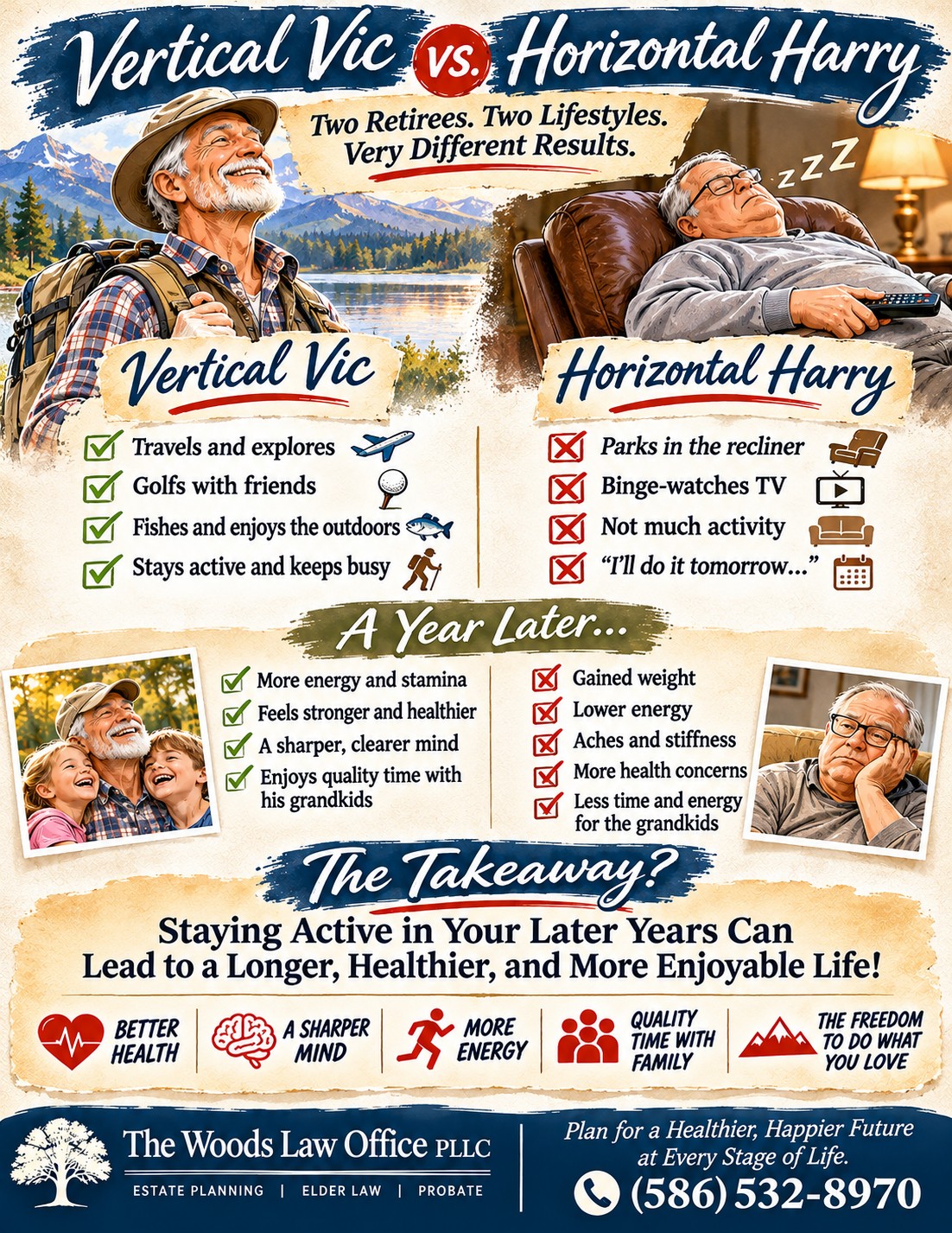
Two retirees. Two very different lifestyles. How the choices you make during retirement can influence your health, independence, and quality of life.
Retirement is something many people look forward to for decades. After years of working, raising families, and managing responsibilities, it’s finally time to enjoy a little freedom.
No more alarm clocks. No more rushing to work. More opportunities to travel, spend time with family, and pursue the hobbies you’ve always wanted to enjoy.
But retirement can look very different from one person to another.
Some retirees embrace an active lifestyle filled with travel, outdoor adventures, and social activities. Others settle into a quieter routine, spending much of their time relaxing at home.
While there’s certainly nothing wrong with enjoying a comfortable recliner and a favorite television show, the habits we develop during retirement can play an important role in our long-term health, mobility, and independence.
Meet Vertical Vic and Horizontal Harry—two fictional retirees whose lifestyles illustrate why staying active matters as we age.
Meet Vertical Vic: Making the Most of Retirement
Vertical Vic has been looking forward to retirement for years.
Now that he has more free time, he’s determined to make the most of it.
His calendar is filled with activities he enjoys, and he rarely lets a beautiful day go to waste.
Vic’s retirement routine includes:
- Traveling and exploring: Whether it’s a weekend getaway or a longer vacation, Vic enjoys discovering new places.
- Golfing with friends: Regular golf outings keep him moving while providing valuable social interaction.
- Fishing and outdoor activities: Vic spends time outdoors enjoying nature and his favorite hobbies.
- Staying busy: Walking, hiking, working around the house, and participating in community activities help him maintain an active routine.
Vic doesn’t necessarily spend hours at the gym.
Instead, he’s found ways to incorporate movement, social connections, and enjoyable activities into everyday life.
And that’s an important distinction.
Staying active in retirement doesn’t have to mean following an intense exercise program. It can simply mean continuing to do the things you love while keeping your body and mind engaged.
Meet Horizontal Harry: Taking Retirement a Little Too Easy
Horizontal Harry had a different vision for retirement.
After working hard for decades, he decided it was time to relax.
And relax he does.
Harry spends much of his day in his favorite recliner, watching television, scrolling through his phone, and occasionally thinking about projects he’ll get around to tomorrow.
His routine often includes:
- Long periods of sitting.
- Watching television for several hours.
- Limited physical activity.
- Fewer social outings.
- Putting off exercise and household projects.
There’s nothing inherently wrong with relaxing.
In fact, rest is an important part of a healthy lifestyle.
However, when inactivity becomes the primary focus of retirement, it may contribute to declining strength, reduced endurance, and other health concerns.
The challenge isn’t that Harry enjoys watching television.
It’s that he’s gradually stopped participating in many of the activities that once kept him physically and socially engaged.
A Year Later: Two Different Retirement Experiences
Imagine checking in with Vic and Harry after a year.
Their experiences illustrate some of the potential effects of different activity levels.
Vertical Vic: Still Moving and Enjoying Life
Because Vic continues to participate in physical and social activities, he has maintained many of the abilities that help him enjoy retirement.
He feels more confident participating in outdoor activities and has opportunities to maintain his strength and stamina.
His active lifestyle may also support:
Better physical health: Regular movement can help maintain cardiovascular fitness, muscle strength, flexibility, and balance.
More energy and endurance: Staying physically active can make everyday tasks feel easier.
Cognitive well-being: Physical activity and social engagement may support brain health as people age.
Stronger social connections: Golf outings, travel, and hobbies provide opportunities to interact with friends and family.
Quality time with grandchildren: Maintaining mobility and endurance can make it easier to participate in family activities.
Vic’s lifestyle doesn’t guarantee perfect health, but it helps him remain engaged in the activities that make retirement meaningful.
Horizontal Harry: Feeling the Effects of Inactivity
Harry’s increasingly sedentary lifestyle may begin to affect how he feels.
He might notice that climbing stairs takes more effort, getting out of his chair feels harder, or he becomes tired more easily.
Prolonged inactivity can contribute to:
- Reduced muscle strength and endurance.
- Increased stiffness and decreased mobility.
- Weight gain in some individuals.
- Greater difficulty performing everyday activities.
- Increased risk of certain chronic health conditions.
- Fewer opportunities for social interaction.
Not everyone who leads a sedentary lifestyle will experience these outcomes, and health changes can have many causes.
However, regular physical activity is an important factor in maintaining health and function as we age.
Why Staying Active Becomes Even More Important With Age
As people grow older, their bodies naturally undergo changes.
Muscle mass and strength may decline, balance can become less reliable, and certain physical activities may require more effort.
While aging itself cannot be prevented, maintaining an active lifestyle can help older adults preserve many of the abilities they need for independent living.
1. Maintaining Strength and Mobility
Muscle strength is essential for everyday activities.
Getting out of a chair, carrying groceries, climbing stairs, and maintaining a home all require physical strength and coordination.
Regular movement, including appropriate strength-building activities, can help older adults maintain muscle function.
Walking, gardening, swimming, and other enjoyable activities can also contribute to overall fitness.
For individuals with mobility limitations, a healthcare professional or physical therapist can help identify safe and appropriate options.
2. Supporting Heart Health
Physical activity can benefit cardiovascular health by supporting circulation, blood pressure management, and overall fitness.
Activities such as brisk walking, cycling, swimming, or other moderate exercise may be appropriate for many older adults.
The right activity level depends on individual health conditions and physical abilities.
Even small increases in movement may be beneficial for someone who has been largely inactive.
3. Keeping the Mind Engaged
Retirement can provide wonderful opportunities for learning, exploring, and trying new things.
Travel, hobbies, reading, volunteering, and social activities help keep daily life interesting.
Physical activity may also support cognitive health.
Although no activity can guarantee prevention of dementia or other cognitive conditions, maintaining healthy habits can contribute to overall brain and emotional well-being.
4. Reducing Fall Risks
Falls are a significant concern for many older adults.
Declining strength, balance problems, and mobility limitations can increase the likelihood of falling.
Appropriate exercise programs that include balance and strength training can help reduce fall risk.
Activities should be selected based on individual abilities and medical considerations.
5. Supporting Emotional Well-Being
Retirement represents a major life transition.
For some people, leaving the workforce can also mean losing daily routines, social connections, and a sense of purpose.
Staying involved in hobbies, community activities, volunteering, or family events can help create structure and enjoyment.
Physical activity may also support mood and emotional health.
An active retirement isn’t just about physical fitness. It’s about remaining connected to the people and activities that give life meaning.
You Don’t Have to Be Vertical Vic to Enjoy an Active Retirement
Not everyone enjoys hiking, golfing, or traveling.
And that’s perfectly fine.
The goal isn’t to copy someone else’s retirement lifestyle.
It’s to find enjoyable, sustainable ways to remain active.
For some retirees, that might mean walking around the neighborhood each morning.
For others, it could involve gardening, dancing, playing with grandchildren, joining a community group, or volunteering.
Even activities performed at home can make a difference.
The key is to avoid spending most of the day sitting without opportunities for movement.
For adults age 65 and older, public health guidance generally recommends a combination of aerobic activity, muscle-strengthening exercise, and balance activities, adjusted to individual abilities and health conditions.
People who have been inactive or who have significant medical concerns should consult their healthcare professional before beginning a new exercise program.
Staying Independent Is About More Than Physical Activity
Maintaining an active lifestyle is an important part of healthy aging, but independence involves other considerations as well.
As we grow older, our financial, medical, and personal circumstances may change.
Even someone who is physically active and healthy today could face an unexpected illness, injury, or other event that affects their ability to manage important responsibilities.
That’s why planning for the future should be part of a well-rounded retirement strategy.
Just as physical activity can help protect your health, thoughtful estate planning can help protect your wishes and provide guidance for loved ones.
How Estate Planning Supports Independence in Retirement
Many people associate estate planning with what happens after death.
However, a comprehensive estate plan can also address important decisions during your lifetime.
For Michigan retirees, several legal documents may help prepare for unexpected circumstances.
Durable Power of Attorney
A durable power of attorney allows you to designate a trusted person to handle certain financial and legal matters according to the authority granted in the document.
This can be particularly valuable if an illness or injury makes it difficult to manage financial responsibilities.
Preparing the document while you have the necessary legal capacity can help reduce uncertainty later.
Patient Advocate Designation
Michigan law allows individuals to designate a patient advocate to make certain healthcare decisions when the applicable legal requirements are satisfied.
This arrangement can help ensure that a trusted person is available to communicate with healthcare providers and make authorized decisions consistent with your wishes.
Wills and Trusts
Wills and trusts can help establish how assets should be managed and distributed.
Depending on the circumstances, a trust may also provide for asset management during periods of incapacity.
A thoughtfully prepared plan can help protect your property, clarify your intentions, and reduce potential complications for family members.
Planning for Future Care Needs
Even the healthiest retirees should consider how they would prefer to receive assistance if their needs change.
Questions worth discussing include:
- Would you prefer to remain in your home as long as possible?
- Who would help coordinate care if needed?
- Are your financial and legal documents current?
- Have you discussed important wishes with your family?
- Do trusted individuals know where essential documents are located?
Addressing these questions early allows you to participate in decisions about your future.
The Connection Between Healthy Aging and Peace of Mind
Vertical Vic and Horizontal Harry illustrate two different approaches to retirement.
But the lesson isn’t that one person is guaranteed a longer life or that the other is destined for poor health.
Health outcomes depend on many factors, including genetics, medical conditions, access to healthcare, and lifestyle.
The important takeaway is that regular physical activity and meaningful engagement can support better health, function, and quality of life as we age.
Likewise, planning ahead can help individuals maintain greater control over their financial and personal affairs.
Both are ways of preparing for the future.
One supports your ability to enjoy retirement today.
The other helps protect your wishes if circumstances change tomorrow.
The Bottom Line: Make the Most of Your Retirement Years
Retirement should be a time to enjoy the freedom you’ve worked so hard to achieve.
Whether your favorite activities include traveling, fishing, golfing, gardening, spending time with grandchildren, or simply taking a daily walk, staying active can help you make the most of those years.
You don’t need to become a marathon runner or fill every day with activities.
Small, consistent choices can make a meaningful difference.
Keep moving. Stay connected. Enjoy the people and activities you love. And make sure you have a plan in place for the future.
Plan for a Healthier, Happier Future at Every Stage of Life
At The Woods Law Office PLLC, we believe thoughtful planning is an important part of maintaining independence and peace of mind as you age.
Our office helps Michigan individuals and families prepare for the future through estate planning, elder law, powers of attorney, wills, trusts, and probate services.
Whether you’re newly retired or reviewing plans you’ve had in place for years, we can help you understand your legal options and prepare for life’s changing circumstances.
The Woods Law Office PLLC
Estate Planning | Elder Law | Probate
Shelby Township, Michigan
(586) 532-8970
Enjoy today. Plan for tomorrow. Protect your future.
This article is intended for general informational purposes and does not constitute medical or legal advice. Individuals should consult qualified healthcare professionals regarding appropriate physical activity and an attorney regarding their specific estate planning needs.