By The Woods Law Office PLLC | October 14, 2026
When we deposit our hard-earned money into a financial institution, we expect more than convenience and competitive interest rates. We expect integrity, accountability, and compliance with the laws designed to protect our country and its citizens.
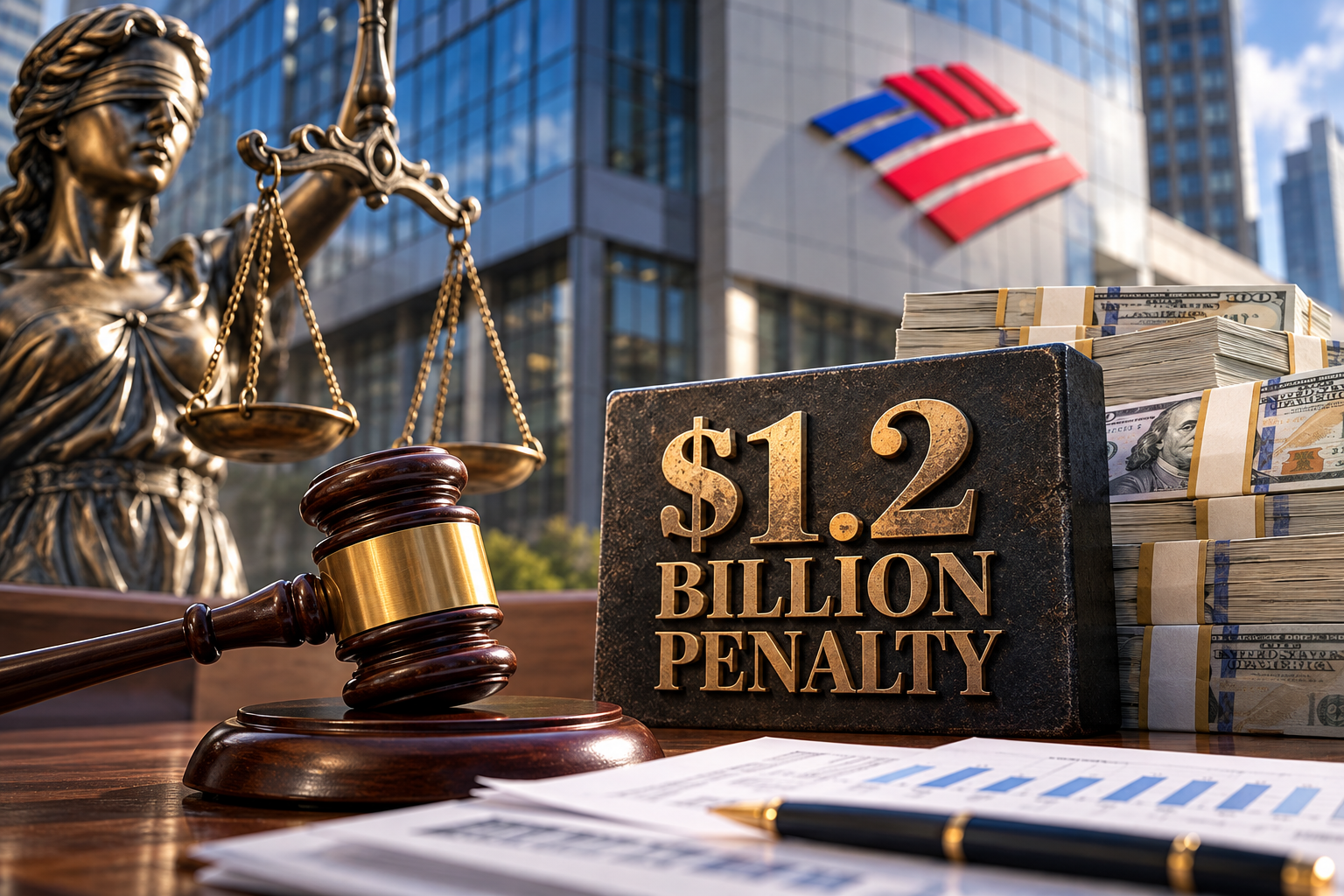
Recent federal enforcement actions against Bank of America raise serious questions about whether one of America’s largest financial institutions has met those expectations. On October 13, 2026, the U.S. Department of the Treasury’s Financial Crimes Enforcement Network (FinCEN) announced a staggering $1.2 billion penalty against Bank of America for failures involving anti-money laundering laws and national security risks.
The Office of the Comptroller of the Currency also assessed a $750 million penalty, which is credited toward the larger FinCEN penalty. Separately, the Office of Foreign Assets Control announced an $11.6 million settlement involving apparent violations of sanctions programs related to Iran, Russia, narcotics trafficking, and global terrorism.
These are not minor regulatory concerns.
What Did Bank of America Do Wrong?
According to the Treasury Department, Bank of America admitted that it willfully violated the Bank Secrecy Act by failing to maintain an adequate anti-money laundering compliance program and fulfill certain reporting and due-diligence obligations.
Federal regulators identified failures involving suspicious financial activity, including transactions associated with Chinese money laundering networks and illicit financial activity along the southwestern United States border. The Treasury Department reported that the bank failed to timely report more than $5 billion in suspicious transactions.
These reporting requirements exist for a reason. Financial institutions play a critical role in identifying transactions that may involve fraud, organized crime, drug trafficking, terrorist financing, and other unlawful activities.
When those safeguards fail, the consequences can extend far beyond the bank itself.
Should We Continue Supporting Institutions That Fail to Protect Us?
That is a question every consumer deserves to consider.
To be clear, the federal enforcement actions do not establish that Bank of America intentionally funded terrorism. However, regulators found serious failures in systems designed to detect and prevent illicit financial activity, including activity presenting national security risks.
There is an important difference between intentionally supporting criminal organizations and failing to maintain legally required safeguards against their activities.
Neither should be taken lightly.
Financial institutions depend upon the trust of their customers. That trust should come with an expectation of accountability. When a bank admits to willfully violating federal financial regulations, consumers are entitled to question whether that institution deserves their continued business.
Our Money Reflects Our Choices
As an elder law and estate planning firm, we regularly work with families who have spent decades saving, investing, and protecting their financial futures. We understand the importance of selecting trustworthy financial institutions to hold retirement savings, trust assets, estate funds, and other investments.
Consumers have choices about where they conduct their banking business. Those choices can reflect not only financial considerations but also expectations regarding corporate responsibility and ethical conduct.
A billion-dollar penalty should prompt more than a passing headline. It should encourage consumers to examine the institutions entrusted with their money.
Accountability Should Not Be Optional
No financial institution should be considered too large or too influential to be held accountable for violating federal law.
The question is not simply whether Bank of America can afford a $1.2 billion penalty.
The more important question is whether consumers should accept serious compliance failures from institutions entrusted with protecting their financial security.
Every consumer must make that decision individually. But we should never underestimate the power of demanding accountability from the businesses we choose to support.
The Woods Law Office PLLC
Protecting Michigan Families, Their Assets, and Their Legacies.
This article is intended for general informational purposes and does not constitute legal or financial advice.